
The Upstanders
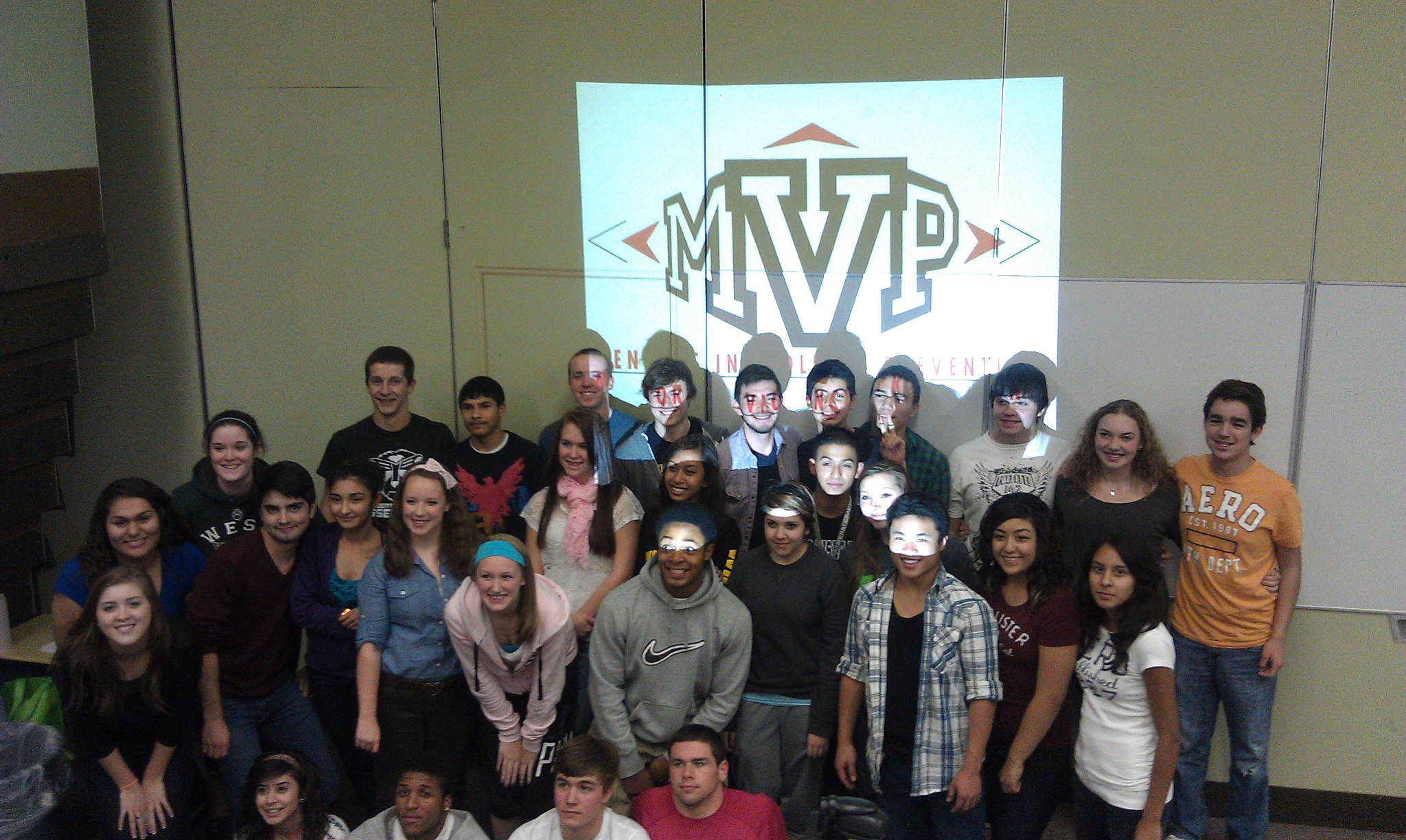
MVP kids, Sioux City, Iowa, 2012
“It takes courage to stand up, it takes courage to do the right thing. The important thing is when somebody stands up and does the right thing, you have to stand there with them, you have to stand side by side with them. Not behind them -side by side and show them, we’re in this thing together.” –Sioux City Schools Director of Secondary Education Jim Vanderloo
Three nights ago, I watched the home made video of the aftermath of the horrific Steubenville, Ohio rape of a 16 year old girl. I can’t describe it. Nothing I can type here can match the lack of humanity and decency I heard in the words coming out of that piece of rough film. The starring character, the one that found the whole episode amusing, encounters one faint voice of protest, a voice that wasn’t loud enough. The loudest voice ruled. I kept having to turn it off. But then I decided to go the distance and watch the whole 12 minutes and 29 seconds. As a violence prevention supporter for 20 years, and a social worker for almost 10 years before that, I told myself I should have been better prepared. I wasn’t. I had trouble sleeping. When I woke up the next morning, I suddenly remembered watching a “scenario” that had an eerie similarity to the prelude of what led up to the events of August 11, 2012.
It was about ten years ago, in a middle school gymnasium in Sioux City, Iowa. I watched a scene where an intoxicated teenage girl, who was barely able to walk, was being led out of a party by a teenage boy. The scene was set up to feel the tension of that moment. Suddenly a girl, and another boy she knew, sensing the danger, approached and intervened to take her to safety. It wasn’t real, it was a scenario, written by a program called “Mentors in Violence Prevention” and acted out by high school future “mentors” in an all day training. The Mentors in Violence Prevention (MVP) Model, co- founded by internationally known speaker, author, and activist Jackson Katz 20 years ago at Northeastern University’s Center for the Study of Sport in Society, is a gender violence, bullying, and school violence prevention program that uses the “bystander” model gives students choices in how to approach potentially dangerous situations involving bullying and gender violence by creating real life scenarios like the one above.
I’d watched the training before. The Waitt Foundation had supported MVP since our colleague Judy Stafford approached then assistant principal Dr. Alan Heisterkamp in 2000 in Iowa to see if he’d implement the program at our pilot high school. But I do remember that day thinking that by choosing a “real life” scenario, this program could make a difference. It has.
MVP asks both young girls and young boys to be what is called “an active bystander”. Another word being used today is “upstander”, a term that became more well known during the time the “Bully” movie premiered, and one used frequently now as part of the movement that grew out of the 2012 documentary.
I don’t think it matters which term is used. Both terms make sense when you are asking kids to go outside their comfort zone and have the courage to stand up for their peers to prevent the violence we hear about too often in this country. The term “bystander” isn’t that new. As Alan Heisterkamp, now a violence prevention trainer and consultant at the University of Northern Iowa and our partner at Waitt Institute for Violence Prevention, says,” Bystander strategies have been around since the early 1970’s. The recent rise in popularity of the bystander education model and the social norms approach in bullying and violence prevention can be attributed to numerous research studies that have yielded positive results. Today, we know more about the impact that active bystanders, sometimes referred to as “upstanders”, have on reducing the frequency of harmful or abusive behaviors among youth and adults alike.”
He’s right. Newsweek wrote in 2009 about studies he did at our pilot high school over 10 years ago. “One study found that after the Sioux City School District in Iowa implemented the MVP program, the number of freshman boys who said they could help prevent violence against women and girls increased by 50 percent. The number of ninth-grade boys who indicated that their peers would listen to them about respecting women and girls increased by 30 percent. New data can be found here. http://wivp.waittinstitute.org/.
Alan was one of the first trainers to work with MVP in high schools in combination with another powerful curriculum we’ve used for many years called “Coaching Boys into Men’. This “Futures Without Violence” program, piloted in 2005, uses the power of adult mentors, particularly athletic coaches with young male athletes, in changing cultures to prevent gender violence and sexual assault. A 3 year evidence-based CDC study in 16 Sacramento, California high schools showed that student athletes who participated in CBIM were more likely to call out abusive behavior among their peers than those outside the program. CBIM is now used in dozens of locations across the country and plans on expanding their map, as does Mentors in Violence Prevention. See http://www.futureswithoutviolence.org/content/features/detail/2431/.
Now, more than ever, we need to create more “upstanders” and not only among our youth, but in partnership with parents, school staff, and finally, the whole community. Can we prevent every incident of violence, bullying, or sexual assault? I think not. But changing the power of the old message, “boys will be boys’ and “kids will be kids” is a step in the right direction. We’ve had young people approach us with stories of “standing up”, not standing by. We’ve heard the stories from kids who’ve worked with both of these programs. The “Bully Project” has seen hundreds, if not thousands, of kids talking about what the power of a voice, a gesture, or a supportive intervention can do. Looking at the kids above, and hearing those stories, I have hope.
Comments (2)