Ms. Farrow tells the truth. If we live long enough, the losses multiply. Yet, I am less graceful about the losing that inevitably comes with age.
Since Aristotle, playwrights have used a three act structure. The first being the introduction to the central character, the second the challenges, joys, actions, and interactions, the third is how it is resolved. Will the character triumph or perish? The three act structure gives depth, lessons to the arc of the narrative. One event must lead to another and then to another — this unifies actions and meaning and creates the semblance of a story.
Modern medicine has given us the gift of longer lives. It’s given us three acts, at least. So I imagine myself, like my mother, in my early 90s. I’m not confident I’ll get there, nor, at times, am I confident that I would choose getting there. I suppose it depends on the day, the week, the month, the year. A third act might have started at 50 not too long ago.
Supposing again, that I live to 90, my third act at 60, started about 7 years ago. I have a happy marriage, a son who thrives, a daughter in law who I adore, a family who sees me with all my flaws, but all my talents, I’m financially stable, and I’m doing what I think has been the strongest work I’ve ever done. So, what the hell would I have to complain about?
This. My third act is on my phone. The contacts I scroll though, now dead. The texts and the emails show the roller coaster that has had less ups than downs since the final act of my life began. A sudden death, the pictures of a funeral I organized, coming out of a mind bending, soul crushing 6 month depression, pictures of a gaunt woman I hardly recognized with hair loss to fall from an illness that took many months to diagnose, another sudden death, my husband’s short but painful depression, a diagnosis leading to a major surgery. It’s all there in texts and calls and pictures. There were at least five more deaths of dear ones, three sudden, two long and lingering.
As of late, there is my husband’s near catastrophic fall. The ambulance, the weeks in hospital, up and down corridors, begging the overworked staff to help. I captured some of all that on that little phone in the closet of the room they put him in. The dingy room, the chapel, the bench outside the oppressive feel that hospitals have. Now the sudden change from a quiet house of sanctuary to a very active skilled care unit that was full of people and relentless construction to make it safe. The third act of my life so far is all captured in a little rose pink covered Samsung.
But, on that same phone, I saw how I survived. My husband survived. If he had fallen backwards into the concrete basement instead of up the stairs, he would possibly be dead. I have no pictures of my husband since his fall, he wouldn’t want that. He generally walks tall with long strides. That’s not the case right now But I do have pictures of all the grab bars, the new walk in shower, the expanded steps that are walker friendly.
I’ve had a preview of very old age. It took me from the beginning of the third act to the near end. My home is ready for the “dying of the light”, the frailty, the so called “Golden Years”. That’s a blessing. Or at least that’s how I see it, for now.
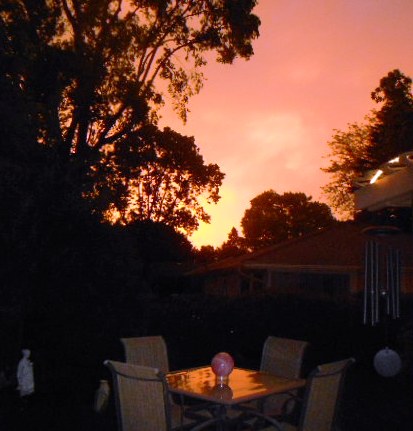
I have my son’s wedding pictures on the rose gold Samsung, the pictures I took when I began to see the light at the end of the long dark tunnel of clinical depression. I have joyful pictures of all my family together, celebrating my mother’s 90th. I captured a Malibu sunset, the ocean, a trip to the lake I love, the gorgeous flowers my family and friends sent when I was hospitalized, the acts of kindness to me and to my husband, my garden in May when the world goes from black and white to lush color. I have pictures of documentary posters and screenings of films I’ve Executive Produced, of which I’m proud. I’m privileged and I know it.
Three act plays usually end two ways. In triumph or tragedy. Some are meant to have no meaning. Yet, I’m drawn to the plays that tell a tale of a flawed character, like us all, and how we roll through, or get stuck and either endure or leave life itself. Hamlet was altered to be a five act play, instead of the original three acts. His tale did not end well. For all his youth, he chose to no longer navigate a cruel world. Arthur Miller’s Willy Loman suffered from a loss of identity. Romantic comedies are the simplified versions of the three act play… boy meets girl, boy loses girl, boy gets girl back. Happy and unrealistic endings please us. Yet, we are also drawn to the rougher more tragic figures as well.
A much younger friend is quite ill. I rail against that. Calamity shouldn’t reach someone at that age. A family member lost a 34 year old brother. Their third acts came too early. It shouldn’t be. But life is not that tidy. We lose young people, to accidents, to rare illnesses, to gun violence, to depression and suicide. Why is the play of their life just one act? Their fate should be ours, not theirs.
The use of flashbacks in plays, done through memory, that can go backwards and forwards, break away from the three act structure. I love flashbacks. I look for them through dreams, through memories, and now, my rose gold Samsung with Spotify, hooked up to my car, playing the music of the seventies from my 20’s, instead of the music of the 20s as I approach my own seventies, not too very far off.
If I could be assured that my son, my husband, my friends and my career were in my future, I’d go back in a second. When I listen to Hall and Oates, Fleetwood Mac, Steely Dan, John Lennon, Joni Mitchell, Jackson Browne, Bonnie Raitt, CSNY, in my car, attached to the rose gold phone, even the one hit wonders take me into my past and bring up a time, a place that I’ll never see again. It cheers me… the going back. Is the feeling close to what Richard Burton felt, on reuniting near the end of his life with Elizabeth Taylor? He said, brutally, “what a terrible thing time is”.
Or should we be grateful for one more day, one more sunrise and sunset. The character Emily, speaking after her own death, from Thornton Wilder’s magnificent play “Our Town” has a beautiful, yet heartbreaking monologue about life that’s both sad and hopeful about the sometimes, just sometimes, sheer beauty of life.
“But, just for a moment now we’re all together. Mama, just for a moment we’re happy. Let’s look at one another .I can’t. I can’t go on. It goes so fast. We don’t have time to look at one another. I didn’t realize. All that was going on in life, and we never noticed. Take me back – up the hill – to my grave. But first: Wait! One more look. Good-by, Good-by, world. Good-by, Grover’s Corners. Mama and Papa. Good-bye to clocks ticking. And Mama’s sunflowers. And food and coffee. And new-ironed dresses and hot baths. And sleeping and waking up. Oh, earth, you’re too wonderful for anybody to realize you. Do any human beings ever realize life while they live it? – every, every minute?”.
Or do we echo Fitzgerald’s Nick in his masterpiece “The Great Gatsby”
“And as I sat there, brooding on the old unknown world, I thought of Gatsby’s wonder when he first picked out the green light at the end of Daisy’s dock. He had come a long way to this blue lawn and his dream must have seemed so close that he could hardly fail to grasp it. He did not know that it was already behind him, somewhere back in that vast obscurity beyond the city, where the dark fields of the republic rolled on under the night. Gatsby believed in the green light, the orgiastic future that year by year recedes before us. It eluded us then, but that’s no matter—tomorrow we will run faster, stretch out our arms farther. . . . And one fine morning——
So we beat on, boats against the current, borne back ceaselessly into the past.”
So I drive on, imagining my past, my first act, through the car and the music and the little rose gold phone, happy to be back there, if only for a moment. But the car is in drive, and forward is where I go.
Easter is a time of miracles. Or at least that’s how I see it. We all have our own way of looking at life on this planet, and that’s just my way. I realized that this Easter day, marked a strange and mystical milestone for me.
12 years ago today, on April 4th, 2009, I entered a very well known facility in Tucson for anxiety and depression treatment. There is a sign on the way in that says, “Expect a miracle”. Very few see it.
How I ended up there and what the experience was like is a story for another day. The facility was a campus, it was lovely and expensive, but the program was tough as nails. My family and I didn’t know all of it when we decided I would go there. They tend to make it sound like a therapeutic paradise on the website, and on our phone conversations. We also had two recommendations from people we trusted. I soon found it about the 16 hour days, the rules, and how to survive the process and come out of it stronger.
I got better there, but it was one of the most difficult experiences I’ve ever had, and I’ve had plenty of difficult experiences.
There I was in the desert, 1,300 miles from home. The desert itself was both literal, and I suppose proverbial. Vast, stripped down, stark, and both dreary and beautiful, sometimes at the same time.
I knew no one and we were cut off from the world. Family could call and leave messages, could send flowers and packages, but as no cell phones, tv, books that we not treatment approved, newspapers, or internet were allowed, we were on our own. We could call friends and family during a phone hour. There were lines though, and for the most part, you usually ended up trying another day.
I spent 42 days there. We were scheduled from 6 am to 10 pm every day.
And yet, there was a sense of magic about the place that I didn’t see for at least two weeks. No one does, as they arrive traumatized and the shock of entry sets you back before you start to gradually improve. Survival shock mode lasts a couple of weeks, then you move into just a day to day get through it, but finally, if you’re lucky, you move from survive to thrive. Many didn’t last there and left. I stayed.
Easter that year was April 12th. I was still in the shock phase, imagining my friends and family happily celebrating. I was newly single, which was a very good thing, but I saw how it helped many patients who had supportive partners. I was lucky to have siblings who cared, but that Easter Day, I found little comfort.
After a walk around the campus using one of the rare free times that day, I thought, why am I here? Is it the right thing? It felt a bit like free falling with no where to land. I needed something, anything to ground me. I needed a sign. I needed a mystical message. I prayed.
In the cafeteria, they had an Easter brunch of sorts. I sat with a beautiful and warm woman from California that I had met in the first few days. We talked of our despondency in being there, feeling alone, feeling cut off. We decided to make a pact. We would each ask for a sign that told us, we were on the rocky but right path. Her sign was white roses. Mine was, as usual, a double rainbow, an unlikely sign in the desert.
About 5 minutes later, we heard banging on the roof, an extremely strong cloudburst. People, starved for rain, went to the window. It lasted several minutes. We stayed at the window. An enormous double rainbow just stunned us all. I have yet, to this day, to ever see one like it.
My friend did not receive her sign, but she had given it much thought and told me she had decided to transfer to another treatment center by the ocean. I hope she is well.
But for me, for whatever reason, I stayed, and in a sense, I shed parts of the old Cindy, and formed a new one. If some of us think of Easter Day as an ascension, I also look at it as a spiritual rebirth, a sign of hope, and a sign of transformation. and really, a miracle.
When I spoke to one of the group therapists the night before I left, I told her that I didn’t miss my destructive relationship with an alcoholic husband, who was a good person, but was drowning in depression and dysfunction. I had been back and forth with this for 24 years. It wasn’t all his fault, it was mine too. I was still fond of him, but I didn’t miss the dance we’d done all those years. She said, referring to the entry sign, “There’s your miracle, Cindy”. And so it was.
The outcry was immediate from health care professionals, state and national media, and most importantly her own citizens. Some citizens who are anti mask and anti science were pleased.
Then there were the rest of us. What I read through the comments, letters and posts was shock, fear, anger, and anxiety. As a leader in a pro mask group, I heard from teachers, essential workers, health care workers, educators, and many others was that despite our own efforts we no longer had protection from the silent serial killer that is Covid 19. That’s how it felt to me personally, as a mother of a school teacher, and as a woman over 60. We knew that we could do our part to protect others, but we also knew that others now had free rein to injure, perhaps kill, and overwhelm, make more dangerous any workplace, and overwhelm our already exhausted health care and essential workers. And from reports today that free rein to ignore covid and its dangerous new variants, has already started.
The Governor’s inexplicable decision, to me, seemed arbitrary, dangerous, and yes, abusive. I’ve written previously that her decisions made throughout the pandemic finally came down to a form of workplace bullying, that I was familiar with due to many years of working with the Workplace Bullying Institute. Sioux City anti-bullying activist calls Iowa governor a COVID-19 bully (desmoinesregister.com)
As a social worker for 10 years and an anti violence activist and philanthropist , both in Iowa and across the country for 20 years, I know bullying and abuse when I see it, hear it, and feel it.
My family foundations have sponsored three anti violence films: “Bully”, HBO’s ”Private Violence”, and Netflix “Audrie and Daisy”. Each explores the horrific costs of violence committed and perpetrated on our featured characters. Some of these characters are living and have survived abuse, though not without considerable trauma. Some, sadly, have died by taking their own lives. The pain was too much for them to bear.
That’s what abuse does to it’s victims. It inflicts pain. What is happening in has and will cause great pain. Iowa’s policies now seem to go beyond the term “bullying”. Bullying, after all is abuse. It’s a stronger word, and the word that many of my colleagues prefer. I’m with them.
Standing along side the obvious physical abuse of costing precious lives, is psychological abuse. They are intertwined. Psychological abuse is insidious. Like the virus, it can be more silent in how it infects people. But it is meant to “distort, confuse or influence a person’s thoughts and actions within their everyday lives, changing their sense of self and harming their well being.” Psychological abuse | Safelives
Like many abuse victims, we feel we have no pushback. We’ve gone so far as to contact the White House. Some cities are pushing back, by continuing to mandate masks, despite the Governor’s order. Our school system in Sioux City is among many who will still require masks. But many of us live in cities that have not or feel they can’t push back, or won’t. Some businesses will continue to follow safety. Citizens are writing, calling, emailing. These are all things we tried during the many months that she refused to mandate masks. We were ignored. When finally, in November, she issued her tepid mandate, it was only because cases were exploding, hospitals were overwhelmed and deaths were spiking.
This is what I’m hearing from other Iowans.
I just heard two days ago of an entertainment venue who had to cancel a show because the band didn’t want to stay in Iowa as it was unsafe.
A licensed massage therapist told me that she is hearing that across the state, LMT’s are getting calls from customers wondering why they still have to be masked.
One gym reported that people were entering unmasked and when asked to put a mask on, were angry and upset because “the Governor says we don’t have to”. They may not be back. Customers are entering and quickly leaving stores, restaurants and buildings with unmasked employees.
People were calling school districts wondering whether their own child’s school will continue to be masked. As above, “distort, confuse”….
A woman working in a doctor’s office has seen a pushback by patients as to why they are still required to wear a mask. “Distort, confuse…”
A friend just reported that when entering a large grocery chain today, she has noticed much less mask compliance and that was frightening to her. “Harming their well being…”
But perhaps the most tragic was reported by a front line worker in Iowa. He has given me permission to share this,
“The first week of Kim Reynolds dropping the mask mandate has passed and I would like to share what I have experienced. The day before the mask mandate was scheduled to expire, we already had customers coming in to the store unmasked that we probably had in the previous two weeks combined. Every one of them stated that the Governor said they didn’t have to wear them any more. I’ve had to explain to people that she stated that businesses were to take safety precautions as they see fit to protect their staff and customers. Our company is very adamant about their mask policy and our higher ups released a statement to our Iowa stores that they stand behind us 100% and realized that we would face repercussions from some customers. Over the last week, I have been told “I’m never shopping here again” , I’ve been threatened to be sued more times than I can count on both hands, and I’ve been threatened with bodily harm a handful of times. The latest of those threats being “I’ll beat your skinny ass”.
He goes on to share that co workers had been told that “they would come back with a gun”. “Sometimes when I’m getting ready for work I wonder if this will be the day that someone knocks me out or pulls a gun. The Governor has emboldened these people. It’s exhausting”. I return to “change their sense of self and harming their well being”
Like many victims who feel trapped within a home, a school, or a workplace, feeling trapped pushes up that fear and anxiety to sometimes unbearable pain. Like many victims of abuse in the home, school, workplace or community, we live here, we work here, we attend school here, our friends and families are here. That is what complicates the process. Living or working in a place you thought was safe, but now threatens your well being brings that unbearable pain.
Iowa is our home. And in that home, which should be a place of comfort and well being, we are not safe.
She did this despite Iowa being one of the top states in the country for Covid cases per capita, and despite being among the lowest for vaccine distribution.
The outcry was immediate from health care professionals, state and national media, and most importantly her own citizens. Some citizens who are anti mask and anti science were pleased.
Then there were the rest of us. What I read through the comments, letters and posts was shock, fear, anger, and anxiety. As a leader in a pro mask group, I heard from teachers, essential workers, health care workers, educators, and many others was that despite our own efforts we no longer had protection from the silent serial killer that is Covid 19. That’s how it felt to me personally, as a mother of a school teacher, and as a woman over 60. We knew that we could do our part to protect others, but we also knew that others now had free rein to injure, perhaps kill, and overwhelm, make more dangerous any workplace, and overwhelm our already exhausted health care and essential workers. And from reports today that free rein to ignore covid and its dangerous new variants, has already started.
The Governor’s inexplicable decision, to me, seemed arbitrary, dangerous, and yes, abusive. I’ve written previously that her decisions made throughout the pandemic finally came down to a form of workplace bullying, that I was familiar with due to many years of working with the Workplace Bullying Institute. Sioux City anti-bullying activist calls Iowa governor a COVID-19 bully (desmoinesregister.com)
As a social worker for 10 years and an anti violence activist and philanthropist , both in Iowa and across the country for 20 years, I know bullying and abuse when I see it, hear it, and feel it.
My family foundations have sponsored three award winning films “Bully”, HBO’s”Private Violence”, and Netflix “Audrie and Daisy”. Each explores the horrific costs of violence committed and perpetrated on our featured characters. Some of these characters are living and have survived abuse, though not without considerable trauma. Some, sadly, have died by taking their own lives. The pain was too much for them to bear.
That’s what abuse does to it’s victims. It inflicts pain. What is happening in has and will cause great pain. Iowa’s policies now seem to go beyond the term “bullying”. Bullying, after all is abuse. It’s a stronger word, and the word that many of my colleagues prefer. I’m with them.
Standing along side physical abuse is psychological abuse. They are intertwined. Psychological abuse is insidious. Like the virus, it’s silent in how it infects people. But it is meant to “distort, confuse or influence a person’s thoughts and actions within their everyday lives, changing their sense of self and harming their well being.”Psychological abuse | Safelives
Like many abuse victims, we feel we have no pushback. We’ve gone so far as to contact the White House. Some cities are pushing back, by continuing to mandate masks, despite the Governor’s order. Our school system in Sioux City is among many who will still require masks.
But many of us live in cities that have not or feel they can’t push back, or won’t. Some businesses will continue to follow safety. Citizens are writing, calling, emailing. These are all things we tried during the many months that she refused to mandate masks. We were ignored. When finally, in November, she issued her tepid mandate, it was only because cases were exploding, hospitals were overwhelmed and deaths were spiking.
I just heard two days ago of an entertainment venue who had to cancel a show because the band didn’t want to stay in Iowa as it was unsafe. a licensed massage therapist told me that she is hearing that across the state, LMT’s are getting calls from customers wondering why they still have to be masked. One gym reported that people were entering unmasked and when asked to put a mask on, were angry and upset because “the Governor says we don’t have to”. They may not be back. Customers are entering and quickly leaving stores, restaurants and buildings with unmasked employees. People are calling school districts wondering whether their own child’s school will be masked. As above, “distort, confuse”….
Like many victims who feel trapped within a home, a school, or a workplace, feeling trapped pushes up that fear and anxiety to sometimes unbearable pain. Like many victims of abuse in the home, school, workplace or community, we live here, we work here, we attend school here, our friends and families are here.
Iowa is our home. And in that home, which should be a place of comfort and well being, we are not safe
My son Ben and I, spring 2017, after recovering from a 6 month depression
“In depression this faith in deliverance, in ultimate restoration, is absent. The pain is unrelenting, and what makes the condition intolerable is the foreknowledge that no remedy will come- not in a day, an hour, a month, or a minute. If there is mild relief, one knows that it is only temporary; more pain will follow. It is hopelessness even more than pain that crushes the soul. So the decision-making of daily life involves not, as in normal affairs, shifting from one annoying situation to another less annoying- or from discomfort to relative comfort, or from boredom to activity- but moving from pain to pain. One does not abandon, even briefly, one’s bed of nails, but is attached to it wherever one goes. And this results in a striking experience- one which I have called, borrowing military terminology, the situation of the walking wounded. For in virtually any other serious sickness, a patient who felt similar devastation would by lying flat in bed, possibly sedated and hooked up to the tubes and wires of life-support systems, but at the very least in a posture of repose and in an isolated setting. His invalidism would be necessary, unquestioned and honorably attained. However, the sufferer from depression has no such option and therefore finds himself, like a walking casualty of war, thrust into the most intolerable social and family situations. There he must, despite the anguish devouring his brain, present a face approximating the one that is associated with ordinary events and companionship. He must try to utter small talk, and be responsive to questions, and knowingly nod and frown and, God help him, even smile. But it is a fierce trial attempting to speak a few simple words.”
― William Styron, Darkness Visible: A Memoir of Madness
I have had three major depressive episodes in my life, and several mild to moderate episodes. Perhaps I’m writing this for me, but I hope that now, while I’m in remission, I’m writing this for you or someone you love.
First, the darker side. When many hear the term depression, they may think about a person who is in grief, who suffers a chronic illness, someone who may be sad over a loss. And indeed, some of those people will, under those circumstances, understandably, be depressed or enter into an episode of major depression.
But what I have is different. It’s an illness. This is a depression not only in the mind, but a depression that lives in the delicate chemistry that makes up our complicated human bodies. It’s real, it’s not imagined, and it’s serious. It kills approximately 45,000 of us per year, and I think that figure is low.
It can recede and remit, but there is no cure, only treatment. When treatment works, I’ve been able to go years between episodes. But it must be treated.
There are many theories as to how depression occurs. One interpretation is that neurotransmitters in the brain are out of balance, and this results in feelings of worthlessness and despair. Magnetic resonance imaging shows that brains of people who have depression look different than the brains of people not exhibiting signs of depression.
First, here’s just a wiki version of what this is:
A major depressive episode is a period characterized by the symptoms of Major Depressive Disorder: primarily depressed mood for 2 weeks or more, and a loss of interest or pleasure in everyday activities, accompanied by other symptoms such as feelings of emptiness, hopelessness, anxiety, worthlessness, guilt and/or irritability, changes in appetite, problems concentrating, remembering details or making decisions, and thoughts of or attempts at suicide. Insomnia or hypersomnia, aches, pains, or digestive problems that are resistant to treatment may also be present.
Here are some things that have helped me over the years. And remember, some things help for mild to moderate depression. If your depression is severe, you need medical treatment.
–Psychotherapy. It helps along with other treatments. For me, it’s an add on.
–Some nutritional supplements can help. Talk to your doctor or read up on supplements that show actual research on which supplements can help.
–Yoga and meditation have been helpful for me in lifting me out of the crippling anxiety that can come with depression. As I have an anxiety disorder as well as major depression, I continue to do this at least twice a week.
–Anti depressants, although this can take time and many get trapped into what we call “Medication roulette” My doctor did a test that matches your body chemistry to a drug that show which drugs you may metabolize better than others.It does not however, show efficacy. But it helped me understand why SSRI anti depressants didn’t work for me.
–A severe episode may require more. For me, twice, it required more.In more serious cases, hospitalization or intensive outpatient treatment may be required. My first two major episodes were assisted by the right medication and in one case, a treatment facility in Arizona.
–My thirdsevere episode required another method. I did Ketamine in Los Angeles in 2016. It worked quickly, and though not without complications, it was amazing.However, it was short lived for me and I returned to California a month later for more and that worked brilliantly. Ketamine treatments are becoming more widely available now.Do some research on this.
–My moderate depression was helped tremendously by Transcranial Magnetic Stimulation. It’s a longer term process, but it did help. And TMS treatment centers are showing up across the country. I needed a special machine called the Nexstim, so I had to travel, but for most, other machines work well.
–Read up on everything, when you can concentrate, and that may be hard. If not, have family members or friends research anything that may be of benefit.
–If you are feeling suicidal, you need immediate help. Don’t keep that to yourself. Reach out.I’m very fortunate to have not been suicidal, but I’ve met many who were at a treatment facility in Arizona I went to in 2009. I had no judgement of those who had attempted suicide. I understood them.The suicide prevention hotline is 800-273-8255
–While you are in the difficult process of waiting for the fog to lift, you may choose a number of options to get through it. Some people literally try to sleep through it. I get that. I walk through it the best I can, while knowing that life as usual has altered.
–If you can, move your body. I swam every day during my 2016 episode. There were days when I’ve forced myself, but research shows that exercise can alter your brain chemistry and in a good way.It didn’t liftme out, but it can help a mild to moderate case.
–Spend time in nature and get natural sunlight every day, when and where possible.
–Talk to friends, family, and a therapist. It can help to just express yourself and have someone telling you they love you and know you’ll get well. Try to not isolate totally, keep talking to people who understand and will listen to you.
–For those friends who feel a party or large social event or travel might help a severe depression, set them straight. At least for me, during those three horrific episodes, my time was best spent one on one with trusted family or friends or with people who understand depression.
– Throwing a severely depressed person in with a group who are not depressed and don’t get depression or what it is, and are just having a great time, can be harmful. That’s just my own experience, but many depressed people have told me they feel the same way.
–Even three to four people together can be stressful for me, and may be for you. Again, it’s different for everyone, but for me , the only large groups I could handle were people who were in a group therapy setting, who were experiencing what I did, and understood.
–When you find family or friends who don’t understand what you are feeling, perhaps share the opening quote above. It’s the darkest, toughest, but best quote I’ve ever read on depression by acclaimed author William Styron.You won’t always feel this way, the pain will end, but until you dig out, that’s how it can look.
–Try to do the smallest things that seem normal. Just a trip to the grocery store, doing a few simple emails, cleaning the house. For some, it’s impossible or seems impossible. But give something a try daily.
–Avoid drinking. I enjoy a glass of wine or so while I’m cooking or when out to dinner. When the 2016 episode hit, I did what I’ve done the other two times I’ve experienced this. I just don’t do it. If you choose, and things are stable, and you do it very moderately, there could be time for that when recovery happens and when stability comes back into your life. That depends on each person, their illness, and their history.
–Try something creative. You may enjoy a bit of art, making a new garden space, re arranging a room. I try to keep busy. It makes the days go by quicker, and believe me, when you are in this, you want the day to fly by. If you can’t though, don’t beat yourself up. You didn’t create this illness.
–Nutrition. As I’ve experienced before and many do, the appetite can be gone. I stopped cooking. I love to cook normally and I’m a “live to eat” kind of person. First, eat what you can get down, even if it’s forcing yourself. Later, do some reading on healthy foods that can help lift the mood.
–Have a complete blood test done, including vitamin levels. You may be insufficient in some areas and a course correction may help.
–Know that your gut bacteria can be related to mood.
-If you can’t find the right treatment close to home, go elsewhere if at all possible.
–Remember, it’s hard to describe this to someone who has never had it. The strongest quote I ever found on the depths of this is above, from author William Styron. It’s dark but brilliant. Have others read that so they just might get a glimpse of how the darkest parts can look to the person suffering.
–Know that it WILL lift. There are treatment resistant depressions, but there are other methods that can be used that go beyond traditional antidepressants.
–You may notice that after a period of terrible psychic pain, you may awaken to more clarity, a better day. Take that as a sign that you are getting better, even if the days go a bit up and down.
You aren’t alone. At one time, in any day, in this country, approximately 20% of us can be experiencing a mental illness. The term brain illness is a better one.
You aren’t a bad person, you didn’t make this happen to you, and that fact that you’re alive and still moving forward is a testament to your strength.
For times of recovery, I choose to look at brighter themes, more clear cut, not perfect, but hopeful like an early spring. I return to Styron, who ended “Sophie’s Choice” this way. He said and I end with this, “This was not judgment day – only morning. Morning: excellent and fair.”
For you…to the morning and the light…you are a precious soul and you can survive.
As an anti violence activist statewide and nationally for 25 years, and a former social worker, I’ve become quite familiar with all forms of abusive behavior. And here in Iowa, abusive policies happen right in the heart of our state government.
What I’ve learned from our expert colleagues is that abuse is about power and control. And that need for power and control can and does terrorize and do harm to others. And, make no mistake, the “masks are encouraged, not required” policy currently in effect in the Iowa Capitol will do harm.
The policy can harm others mentally, psychologically, emotionally, and yes, physically.
The REACH team in Massachusetts, explains it well. “The commonly held definition of abuse, which we use in all of our trainings, is “a pattern of behavior used by one person to gain and maintain power and control over another.” One thing to note about that definition is that we are talking about a pattern of behavior, in other words, not just one incident. These behaviors can take on a number of different forms. Many people, when they hear the word “abuse,” think of physical violence. It’s important to note that physical force is one means of power and control and it is far from the only one”. 6 Different Types of Abuse – REACH (reachma.org)
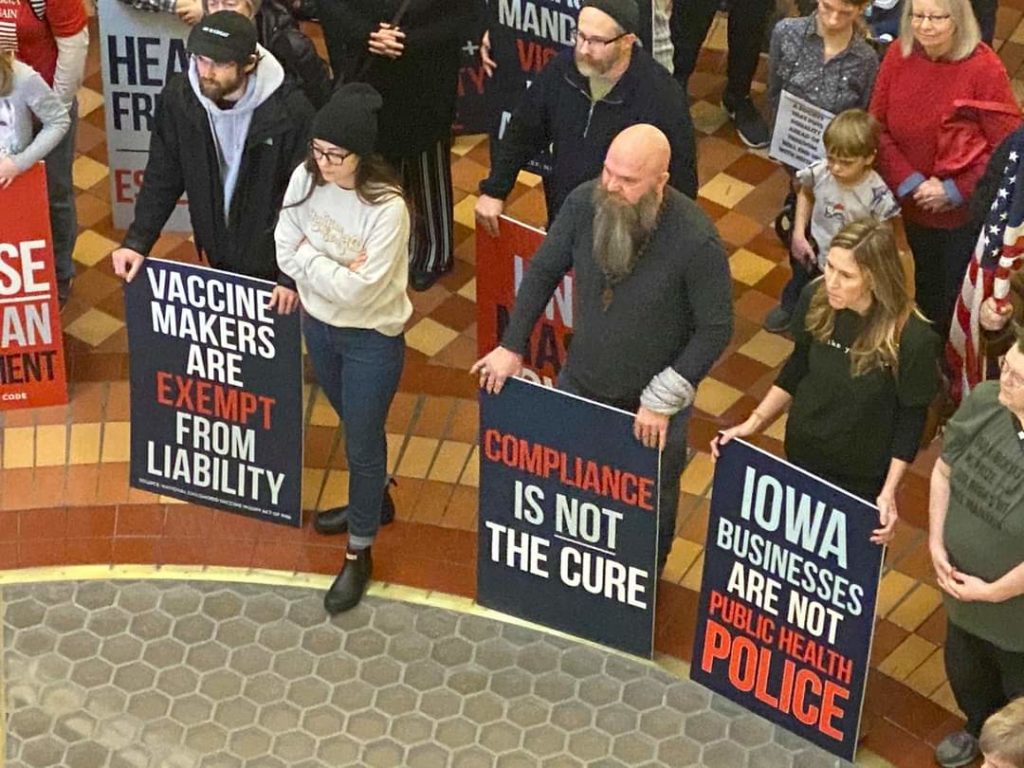
Defying laws, CDC guidance, public health experts guidance, and essentially the laws of reason and human decency, the first day of the Iowa Legislative session saw hundreds of unmasked people close together in the Capitol Rotunda. They were protesting Governor Kim Reynold’s partial mask mandate that requires all people age 2 and over to wear masks in public indoor spaces if within 6 ft of others for 15 minutes. Republican state lawmakers had earlier refused to support Democrats’ proposals to require face masks in the Iowa State Capitol during this year’s legislative session.
Obviously, they were less than 6 ft apart for far longer than 15 minutes. And the Majority Republican leadership were not only just fine with that, but some legislators joined in and spoke to them.
This speaks to Psychological abuse, a form of abuse characterized by a person subjecting or exposing another person to behavior that may result in trauma. Also known as emotional abuse, these actions can include threatening the physical health of the victim or the victim’s loved ones, purposely controlling the victim’s freedom, and/or acting to undermine or isolate the victim. What is Psychological Abuse? – Definition & Overview – Video & Lesson Transcript | Study.com
This policy, in my opinion, subjects anyone visiting the Capitol to fear, trauma, illness, and quite possibly, death. Governor Reynolds could fix this with the stroke of a pen, as her partial mandate gives individuals, buildings, and business owners a reason to not enforce.
House Speaker Pat Grassley has said that he can’t enforce a mask mandate and he is not willing to have lawmakers removed if they refuse to comply. Why not? There is a dress code. There are many rules enforced in our State House. But now, due to this non policy, workers have filed a complaint with OSHA, who began investigating the complaint. This speaks to the fear felt by these workers.
A snapshot from today’s date: The Iowa Department of Public Health has reported of 10 a.m. Sunday, 319,203 confirmed cases statewide since Iowa’s outbreak began, with an additional 757 cases confirmed in the past 24 hours. They also reported 250 additional COVID-19 death, raising the statewide death toll to 4,901.
One week ago, Iowa had the 17th highest per capita death count in the nation and the second highest 7-day average positivity at 33% behind Idaho, according to researchers at Johns Hopkins University. Iowa posts 62 virus deaths, total reaches nearly 4,400 (kttc.
Lacking enough vaccines, and with the United States now facing this news, masks and compliance are the only way out for most of us. It saddens me that “Iowa nice” isn’t “Iowa nice” at this point to these decision makers. If they insist on continuing this abusive policy, and I would guess they will, why should we trust legislative leaders or the Governor with the health and well being of Iowans that they should protect? In short we can’t.
As the scourge of COVID-19 ravages the country and around the world, I’ve watched our Iowa cases spike drastically. We have over 20,000 new cases in 30 days, campuses are blowing up, 250 more Iowans have died, schools are re opening, and our poor numbers are making national news.
I’ve watched carefully for signs that show that the Governor’s office is being, open, transparent, willing to change if wrong, willing to take responsibility for mistakes, and most importantly, if they show care and concern for the lives of citizens.
I’ve seen them ignore the opinions of experts, such as guidance from the White House task force and our own epidemiologists and doctors, regarding additional closures and a much needed mask mandate and the pleas of citizens, doctors, faith groups, and educators.
Iowa, we’ve got a problem. In my opinion, the citizens of Iowa are experiencing a form of bullying.
That may seem a strong statement, but in my years of anti-bullying work, I’ve come to learn that adult bullies in positions of power don’t always follow the pattern of the traditional school yard bully, who beats up another kid and takes his lunch money.
The type of bullying we are now seeing from the Governor’s office is not as overt. It’s subtle. It’s dangerous, and it’s real.
About 15 years ago, we partnered with Drs. Garie and Ruth Namie, of the Workplace Bullying Institute, to sponsor the first Workplace Bullying study in America. Our work, in addition to supporting domestic violence prevention programs, had focused, and still focuses, on school bullying and cyber bullying. We sponsored the Emmy nominated 2012 film “Bully,” as well as others, to shed more light on the problem.
But early on, I wanted to take the work further, and to see what more we could find out about adult bullies in the workplace or bullying from those in positions of power.
A CEO of an organization can create either a healthy workplace, or a workplace filled with fear, confusion, and anxiety. Our Governor is the state’s CEO and what I’ve been seeing recently concerns me deeply for all Iowans.
Interestingly, I met then Lieutenant Governor Kim Reynolds at an anti-bullying event in Sioux City. She and Governor Terry Branstad had heard of the anti-bullying work the Sioux City School District was doing and came here to see what programs were working well.
Governor Reynolds and I had a nice talk, and she seemed genuinely interested in preventing bullying. I believe to this day that she is supportive of that work and cares about bullying in schools.
Despite Iowa closing down much of Iowa this spring, even though stopping short of a stay at home proclamation, many of the decisions were good ones. I still do not agree with not ordering a stay at home, nor do I agree with the tragic lack of monitoring of meat packing plants. But something was being done. Something.
But then came late spring. The door was flung wide open within a two-week period, despite not following CDC guidelines of safe reopening. Cases spiked as they did in many places, but they didn’t have to. Citizens were to blame as well, by not wearing masks, crowding into packed bars and ignoring the pandemic. The Governor said there was no need for a mask mandate, despite the huge majority of states who imposed them, as she trusted Iowans.
That didn’t work out well. In the last month, as campuses reopened, a mask mandate and more closures were desperately needed.
Hundreds of Iowa medical professionals banded together to plead for a mask mandate, citizens write, call, and petition. Epidemiologists who know what they are doing submitted papers. They were ignored.
Cities then attempted to mandate face coverings in their own communities, only to be told that the power was in the Governor’s hands, and that their actions were illegal. I repeat, they were told, while trying to save lives, that their actions were illegal.
The citizens were then chastised for their behavior, while no further action, with the exception of the closures of bars in six counties, was taken by the Governor to slow the spread of this silent killer.
The action done to our local school districts by the state was the most disturbing. School districts were asked to submit three plans to the Governor and the Department of Education. They worked tirelessly for months, only to be told that their efforts were in vain. The about face by the Office of the Governor was ill advised. Many communities were well above the percent of infections set by the CDC and other health organizations to safely reopen schools.
Districts went to court to fight to remain online. They were denied by both the administration and now a judge.
Why do I think the State is bullying the citizens of Iowa? As I learned over the years, some forms of bullying are overt, some more covert.
As Dr. Namie has said, “Bullying’s common theme is a need to control.” It can be aggressive or passive aggressive.
Passive aggressive bullying is called “Gatekeeping,” one of the four main types recognized by the WBI.
The Gatekeeper blames others.
The Gatekeeper withholds information.
The Gatekeeper demands deadlines, and then changes the rules.
The Gatekeeper creates stress and horrendous anxiety on those affected.
The Gatekeeper threatens to withhold vital resources necessary.
The Gatekeeper strikes when others are feeling the most vulnerable and then blames others if things go terribly wrong.
In an early August press conference, AP reporter David Pitt asked if the Governor was concerned about the risk of opening schools. It was a valid and necessary question. The Governor’s response was to blame the media.
As the Des Moines Register beautifully stated August 7th, “Iowans need comprehensive, detailed, information as we try to safely navigate our daily lives and make decisions. We are too frequently not getting that information from the Governor. Questions are ignored. Public information requests are not fulfilled. Interviews are refused.”
In short, my friends and colleagues in my beloved Iowa, there is a pattern here . And it is costing lives.
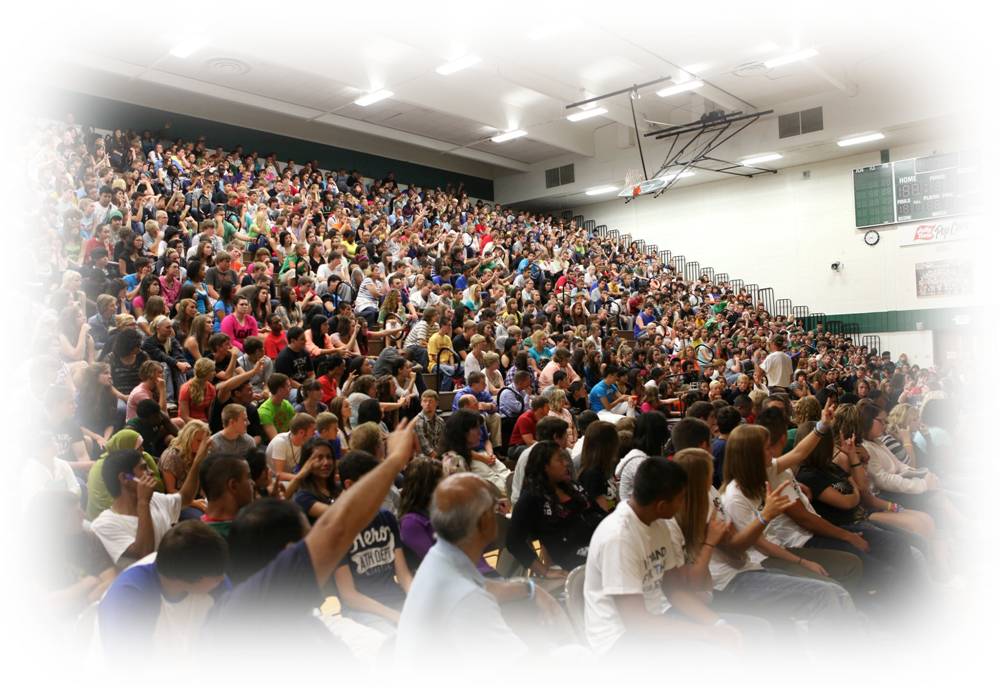
Students at an anti bullying rally in Sioux City, Iowa
“You’ve got to be taught to hate and fear You’ve got to be taught from year to year It’s got to be drummed in your dear little ear You’ve got to be carefully taught” Richard Rodgers from “South Pacific”
Update February 2nd, 2021- I wrote this nearly two years ago. This was before the election of 2020, the violent insurrection at the United States Capitol, but in the middle of what I saw as a huge divide in this country, cyberbullying by adults on a level that was the worst I’d seen. I feared what came next. I wrote this for adults with kids, but it’s essentially it’s for all of us. My niece getting cyberbullied today triggered me to revisit this piece. I grow weary of the hate.
As school bullying became a hot button issue and one that was vital to address, Waitt Institute for Violence Prevention supported the 2012 documentary “Bully”, as well as ramping up our anti bullying and anti violence programs on the ground.
The adoption of many excellent programs across the country may well be working, as we’ve seen incidents of on site school bullying decrease. The percentage of 12- to 18-year-olds who reported bullying incidents in 2015 was 20.8 percent. That’s nearly 11 percent lower than the 31.7 percent of students who reported bullying incidents in 2007. https://www.k12insight.com/trusted/report-bullying-in-schools-on-the-decline/
But America, we’ve got a problem.
And it’s us. It’s not just in school. It’s not just kids. It’s everywhere and adults are joining in in full force, online and elsewhere. And for the first time in my 25 years of violence prevention work, it’s scaring the hell out of me.
What I wrote in Huffington Post in 2012 is this “That the Internet has come to represent our world, both at its best and at its worst, this isn’t surprising, but couldn’t we raise the level of the discourse beyond targeting each other? ”
For some, apparently not. We haven’t taken discourse up a notch, we’ve taken it down. Cyber bullying of youth, on the rise in the past 7 years, can and does harm and even kill children. No one wants their child harmed in this way, but while we want this to stop, we’ve ratcheted it up as adults and the targets are other adults.
It’s a mean, mean, mean world out there right now, and it doesn’t seem to be getting kinder any time soon. So, what can we do?
We can do this, for one. Ross Ellis states”Parents also play a role in preventing bullying behavior by modeling empathy, respect, and kindness toward others. Parents first model how to treat others by how they treat their own children. “When kids know they can count on their parents and caregivers for emotional and physical support, they are more likely to show empathy to others,” (Ellis, 2016). https://www.huffpost.com/entry/how-to-keep-children-from-modeling-aggressive-adult_b_58239031e4b044f827a7973d
And this.The same piece also states “In addition, children are more likely to mimic a behavior if they see the behavior positively reinforced (Rymanowicz, 2015). https://www.canr.msu.edu/news/monkey_see_monkey_do_model_behavior_in_early_childhood When a negative behavior is rewarded over a positive behavior, the negative behavior is reinforced. For instance if a child hears an adult making a racial slur, and another adult laughs, what has the child learned? In contrast, what if the child hears the second adult calmly respond that the slur was offensive and ask the person to not use that language?”
Parents and mentors can do much. But we can’t control how some of our leaders and some in the media name call, demonize, belittle, obstruct, and through psychological and emotional abuse, become cheerleaders for anger in America.
I’ve heard stories of families no longer speaking to each other because of political party and ideology. I’ve seen old friends who have protracted and disturbing battles with each other ad nauseam. Chances are, you’ve seen it too.
We can look away. We can refuse to join in. We can recognize that children follow our lead, and be more careful.
Or we can be left, as I am right now, in a place I’ve rarely found myself, wondering if it will ever get better before it gets worse.
Cindy Waitt, a former social worker, is the Executive Director of the Waitt Institute for Violence Prevention and the Executive Producer of the Emmy nominated “Bully”, HBO’s “Private Violence” , and the award winning “Audrie and Daisy’>
I have had three major depressive episodes in my life, and several mild to moderate episodes. Perhaps I’m writing this for me, but I hope that now, while I’m in remission, I’m writing this for you or someone you love.
First, the darker side. When many hear the term depression, they may think about a person who is in grief, who suffers a chronic illness, someone who may be sad over a loss. And indeed, some of those people will, under those circumstances, understandably, be depressed or enter into an episode of major depression.
But what I have is different. It’s an illness. This is a depression not only in the mind, but a depression that lives in the delicate chemistry that makes up our complicated human bodies. It’s real, it’s not imagined, and it’s serious.
It can recede and remit, but there is no cure, only treatment. When treatment works, I’ve been able to go years between episodes. But it must be treated.
This is a depression not only in the mind, but a depression that lives in the delicate chemistry that makes up our complicated human bodies. It’s real, it’s not imagined, and it’s serious. It kills approximately 45,000 per year, and I think that figure is low.
There are many theories as to how depression occurs. One interpretation is that neurotransmitters in the brain are out of balance, and this results in feelings of worthlessness and despair. Magnetic resonance imaging shows that brains of people who have depression look different than the brains of people not exhibiting signs of depression.
First, here’s just a wiki version of what this is:
A major depressive episodeis a period characterized by the symptoms of Major Depressive Disorder: primarily depressed mood for 2 weeks or more, and a loss of interest or pleasure in everyday activities, accompanied by other symptoms such as feelings of emptiness, hopelessness, anxiety, worthlessness, guilt and/or irritability, changes in appetite, problems concentrating, remembering details or making decisions, and thoughts of or attempts at suicide. Insomnia or hypersomnia, aches, pains, or digestive problems that are resistant to treatment may also be present.
Treatments for a major depressive episode include
Psychotherapy. It helps along with other treatments. For me, it’s an add on.
Some nutritional supplements can help. Talk to your doctor.
Anti depressants, although this can take time and many get trapped into what we call “Medication roulette”
In more serious cases, hospitalization or intensive outpatient treatment may be required.
There are new treatments that I have tried, with some success. I elaborate below.
First and foremost, treat the depression with the help of a professional. This is imperative. Your doctor, a psychiatrist, or therapist can help. If necessary, and it usually is, try an anti depressant. It can be maddening to find the right one, but eventually some can land on relief. If not, do the research. There are new methods available where a doctor can match your body chemistry to a drug that show which drugs you may metabolize better than others. My first two major episodes were assisted by the right medication. My third required another method.
Read up on everything, when you can concentrate, and that may be hard. If not, have family members or friends research anything that may be of benefit.
If you are feeling suicidal, you need immediate help. Don’t keep that to yourself. Reach out.
While you are in the difficult process of waiting for the fog to lift, you may choose a number of options to get through it. Some people literally try to sleep through it. I get that. I walk through it the best I can, while knowing that life as usual has altered.
If you can, move your body. I swim twice a week, and walk three times a week. There are days when I force myself, but research shows that exercise can alter your brain chemistry and in a good way.
Spend time in nature and get natural sunlight every day, when and where possible.
Talk to friends, family, and a therapist. It can help to just express yourself and have someone telling you they love you and know you’ll get well. For those friends who feel a party or social event might help, set them straight. At least for me, my time is best spent one on one. Large groups can make it worse for me. Even three to four people together can be stressful because maybe for the first time in your life, you don’t care what they are saying. When you find family or friends who don’t understand what you are feeling, perhaps share the opening quote above. It’s the darkest, toughest, but best quote I’ve ever read on depression by acclaimed author William Styron.You won’t always feel this way, the pain will end, but until you dig out, that’s how it can look.
Try to do the smallest things that seem normal. Just a trip to the grocery store, doing a few simple emails, cleaning the house. For some, it’s impossible or seems impossible. But give something a try daily.
Don’t drink. I enjoy a glass of wine or so while I’m cooking or when out to dinner. When this episode hit, I do what I’ve done the other two times I’ve experienced this. I just don’t do it. If you choose, and things are stable, and you do it very moderately, there could be time for that when recovery happens and when stability comes back into your life. That depends on each person,their illness, and their history.
Try something creative. You may enjoy a bit of art, making a new garden space, re arranging a room. I try to keep busy. It makes the days go by quicker, and believe me, when you are in this, you want the day to fly by. If you can’t though, don’t beat yourself up. You didn’t create this illness.
As I’ve experienced before and many do, the appetite can be gone. I stopped cooking. I love to cook normally and I’m a “live to eat” kind of person. First, eat what you can get down, even if it’s forcing yourself. Later, do some reading on foods that can help lift the mood.
Know that your gut bacteria can be related to mood. In this case, in this episode, I was given a strong antibiotic for a condition it turns out I don’t have. It was a guess on the doctors part. But in the best scenarios, anti biotics can destroy not only the bad stuff, but the good as well. You might need a strong prescription strength probiotic if you have to go on antibiotics for any reason. Know that there’s a link with these.
I went a bit beyond my medical community here in Iowa. If you can’t find the right treatment close by, go elsewhere if at all possible.
Remember, it’s hard to describe this to someone who has never had it. The strongest quote I ever found on the depths of this is above, from author William Styron. It’s dark but brilliant. Have others read that so they just might get a glimpse of how the darkest parts can look to the person suffering.
Know that it WILL lift. There are treatment resistant depressions, but there are other methods that can be used that go beyond traditional antidepressants. Look into Ketamine and TMS treatment. Though not without some complications, both Ketamine and TMS (Transcranial Magnetic Stimulation) for me have helped tremendously.
You may notice that after a period of terrible psychic pain, you may awaken to more clarity, a better day. Take that as a sign that you are getting better, even if the days go a bit up and down.
You aren’t alone. At one time, in any day, in this country, approximately 20% of us can be experiencing a mental illness. The term brain illness is a better one.
You aren’t a bad person, you didn’t make this happen to you, and that fact that you’re alive and still moving forward is a testament to your strength.
For times of recovery, I choose to look at brighter themes, more clear cut, not perfect, but hopeful like an early spring. I return to Styron, who ended “Sophie’s Choice” this way. He said and I end with this, “This was not judgment day – only morning. Morning: excellent and fair.”
For you…to the morning and the light…you are a precious soul and you can survive.
“It was the best of times, it was the worst of times.”Charles Dickens, Tale of Two Cities
On September 28th, we’ll be attending the 36th Annual News and Documentary Emmy Awards in honor of two very different films that we supported from their inception, “Bully” and “Private Violence”.
“Bully” opened the PBS Independent Lens season and “Private Violence’ bowed on HBO, both in October of 2014. As early supporters of both, we at Waitt Institute for Violence Prevention couldn’t have been happier about that. But their road to the finish line couldn’t have been more different.
Lee Hirsch and Cynthia Lowen’s “Bully” had the “buzz’ from the beginning. It struck a powerful chord, in its riveting and authentic footage of children and families devastated by bullying. Kids tormenting kids hits us at a basic level, and it’s a powerful punch. It was a perfect meshing of the right time, right place, and right issue
“Private Violence” was a very different story. Cynthia Hill’s direction, Kit Gruelle’s voice and vision throughout, and Deanna Walters’ frightening and extraordinary journey weaves the experiences of domestic abuse survivors and advocates, as it challenges, and consequently explodes the myths behind domestic violence. It suggests some answers to the age old question, “Why doesn’t she just leave’?
While both documentaries were driven by the same hopes, concerns, and passions, the production and postproduction of “Bully” took about two years to fund. “Private Violence” was started more than eight years ago.
We think it’s time to move past the national disconnect and acknowledge how intertwined these two issues are. As early backers of both films, we believe that violence in the home and bullying in school must be treated as co-equals. They are inextricably linked, and the data backs it up. A 2011 CDC study told us that kids who witness violence in the home are more likely to be bullied, and more likely to become bullies themselves. http://www.cdc.gov/mmwr/preview/mmwrhtml/mm6015a1.htm
It’s time to see that the first time some children see or witness violence is not in the school yard. It’s where they live. Over 8 million children were exposed to family violence in the last year alone.
As we advocate that prevention should start with kids, let’s not forget that bullying prevention education can be paired with the critical piece of age appropriate relationship violence awareness programs and can change the attitudes and behavior of young people as they enter adulthood.
Research now looks at possible links between bullying and dating violence. Prevent
Connect cites the following, “Young adolescents who perpetrate bullying become involved in romantic relationships earlier than those who do not bully, and are more likely to report verbal and physical aggression in their earliest intimate relationships” (Josephson and Pepler, 2012)
Bullying is universal and non- gender specific. Who doesn’t relate to being bullied at some time in their life? Family First Aid reports that about 30 percent of teenagers in the U.S. have been involved in bullying, either as a bully or as a victim and we’ve all seen it, either as a victim, a perpetrator, or a witness. That’s a frightening number. Too many children are a part of this.
However, according to partners at Futures without Violence, “approximately one in three adolescent girls in the United States is a victim of physical, emotional or verbal abuse from a dating partner – a figure that mirrors victimization rates for other types of violence affecting youth.” http://www.futureswithoutviolence.org/resources-events/get-the-facts/
Gloria Steinem, an early supporter and Executive Producer of “Private Violence”, has suggested that the term “domestic violence” should be changed to “original violence. “It’s what makes people feel that it’s inevitable or that it’s normal or both”, she said. “If you have violence in the home then it normalizes it everywhere else.”
Dickens’ quote “it was the best of times, it was the worst of times” could describe what we, in the violence prevention movement, feel today. As many strides as we’ve made, we still have a long way to go. Linking violence in its many forms and helping kids, educators, and families connect those dots is vital. As a Futures Without Violence ad campaign suggested, “Teach them early, teach them often.” With dating violence and bullying prevention, teach them together.
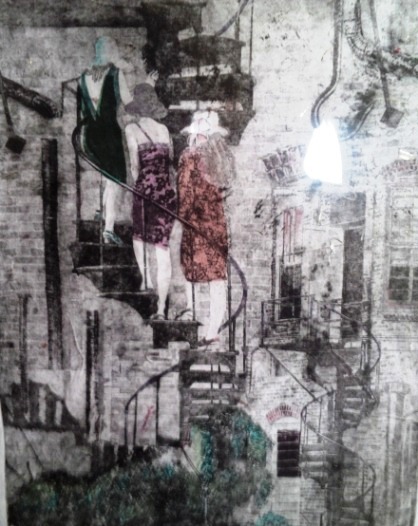
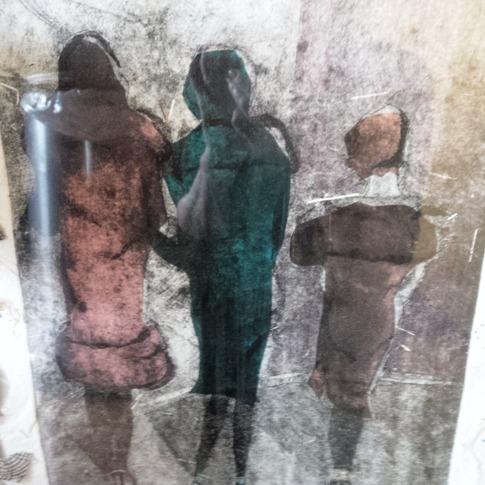
This lovely painting of three women came to me in the 1990’s and I remember wondering if that was me and two other women I hadn’t met yet. It hung in my living room for years, but when I redecorated, I put it away. When I stumbled across it recently in the basement, I realized that I did meet these women, around 10 years later. And when we met, we had work to do. And as it turns out, we had a film to make.
I loved the image of these women, dressed up but navigating what seemed to be a difficult and winding climb up a narrow staircase, and navigating that climb in heels. When I saw it again, a couple of months ago, with fresh eyes, the woman in the middle of the group seemed like Kit Gruelle, in her signature purple, who is the guide, teacher, and advocate in the film “Private Violence”. Kit is also a survivor, and she became my friend.
The woman with the long blond hair reminded me of Cynthia Hill, the director of the film. We are now more than colleagues; we’re friends as well.
I’d always thought of myself as the woman in the green dress, simply because I liked the dress, I love green, and it looked like something I’d wear. The painting, by a wonderful artist named Earline McNeil Larsen, is called “Conspiraling Women”.
I met Kit Gruelle, in Del Mar, California in 2005. Cynthia Hill came later, in North Carolina. There was a immediate familiarity about both of these women. It was that click that goes off in your head or the shivers that go through your body when something significant happens or is about to happen. These two mainstays of the “Private Violence” feature film and documentary project stood there talking to me prior to a 2010 fundraiser in Chapel Hill, where Gloria Steinem, one of our early supporters was to speak. Those shivers came on even stronger. I thought at the time about the power of the number 3 (three women, the triple goddess symbol) and hoped that that unseen power could move this film forward. At that point, we knew it would take a long time to get the whole thing launched. And it did.
There were times when it seemed like letting it all go might be easiest. The other film, “Bully”, that the Waitt Institute for Violence Prevention supported took about two years from start to launch at the Tribeca Film Festival in 2011, and the funding came in quickly once it got going. That didn’t surprise me, as bullying had become a high profile topic, and that story needed to be told. I’m glad it was. But it was a tougher go for “Private Violence”. That didn’t surprise me either. The title of the film tells why. It’s something we still tend to keep in the dark, hidden away.
Along the long path to getting it done, though, more and more earth angels, women and men, kept appearing showing up at the right time and right place with perfectly timed grants, encouragement, connections and support that we desperately needed. I can’t name them all here, but each one provided vital support.
The three of us have been through a lot together, and separately, in the years that it took to complete the story. We each have been through challenges, both in life and in getting the film to its January Sundance opening. Cynthia has given birth to two daughters since we all met. We come from three different worlds, and sometimes meshing those worlds isn’t easy. We laughed together, and cried together, but we’ve stuck together and I’m glad we made it up that narrow and winding staircase in those high heels. We know that at the top of that staircase is another, and another. The film is only a small part of that work so many people do every day, but it felt good to be able to pause, and know that we’d made that first climb.
As I was writing this, I remembered that I had bought two paintings, and went down to the basement and took this shot of the companion piece to “Conspiraling Women”.
It turns out that the name is “Triple Alliance”. I don’t know who the women in this painting are, but that doesn’t matter. When I see the title and the image, it reminds me of the alliance of all the women who came together for this. Perhaps the three above symbolize the extraordinary trifecta of three of the women featured- Deanna Walters, Stacy Cox, and Jean Kilpatrick. They demonstrate the strength of survivors and advocates, both in the film, and in their lives. Or the piece could stand for the three women who founded Chicken and Egg Pictures, who believed in us at a crucial point. I don’t know, because there are so many more who over the years found us, joined us, and reached out. Both paintings remind me that women are strong, but even stronger when we come together. We’re stronger yet when we don’t give up on something we need to do or say. The paintings are both upstairs now, in a favorite room, full of light. I think they’ll stay there.
“These aren’t domestic disputes, they are about criminals attacking crime victims”Anne Jones, Author of “Next Time She’ll Be Dead“
This caught my eye a few years back.
The headline read, “MAN ARRESTED IN DOMESTIC DISPUTE“.
It went on to describe the case of a 30 year old man who strangled his girlfriend until she passed out several times over a two day period, and left her hospitalized with numerous internal injuries and bleeding.
Is this a “dispute?” And is this type of headline unusual? Not so much. The word is still used widely, as are the equally bad terms “domestic disturbance”, and”domestic altercation”. Even worse is “crime of passion” or my personal non- favorite “love triangle”.
I’m with the Virginia Sexual and Domestic Violence Alliance when they say this in their site’s media education literature, “A dispute is akin to a disagreement or argument; it implies equal power. Intimate partner violence, on the other hand, is a serious, cyclical pattern of abuse and unhealthy behavior meant to control an individual. Referring to such incidents as “domestic disputes” takes away from its seriousness. It also implies an isolated incident, rather than a pattern of abuse. Call it domestic violence or intimate partner violence.”
Here’s just a sample of headlines I’ve run across in the past 24 hours from March 17th and 18th 2024: The first from Clarendon Hills, Illinois was just about the worst. “A person died in a domestic disturbance”. No, the person was murdered.
CLARENDON HILLS, IL – A person died in a domestic disturbance Saturday morning in unincorporated Clarendon Hills, the DuPage County Sheriff’s Office said.
A woman died after being shot in ‘domestic incident’ in Orange County, Sheriff’s Office says
A woman died after being shot in ‘domestic incident’ in Orange County, Sheriff’s Office says
Dolphins star Tyreek Hill had alleged domestic dispute in January, vows to clean up off-field behavior
Madison Police Dept. arrest suspect for alleged domestic disturbance involving knife
There are hundreds, if not thousands of those headlines and leads to be found. These are not bad people writing these stories. My husband, a former journalist, tells me that he was trained to use the term “domestic dispute”. as are many print and broadcast journalists who could use some additional education in how we refer to the hundreds of thousands of incidents and the thousands killed each year in this country alone. These are violent crimes and some are murders. Some facts…
1 in 4 women and 1 in 7 men will experience severe physical violence by an intimate partner in their lifetime. (CDC, 2017)
1 in 10 women in the United States will be raped by an intimate partner in her lifetime. (CDC, 2010)
Approximately 16.9% of women and 8.0% of men will experience sexual violence other than rape by an intimate partner at some point in their lifetime. (CDC, 2010)
Data on sexual violence against men may be underreported.
An estimated 9.7% of women and 2.3% of men have been stalked by an intimate partner during their lifetime. (CDC, 2017)
Nearly half of all women and men in the United States will experience psychological aggression by an intimate partner in their lifetime. (CDC, 2017)
Over half of female and male victims of rape, physical violence, and/or stalking by an intimate partner experienced some form of intimate partner violence for the first time before 25 years of age. (CDC, 2010)
Knowing that, can we move to writing and reporting about it with the harsh reality in mind? There is a good bit of material I found today from the Virginia Sexual and Domestic Violence Action Alliance that could help. http://www.vsdvalliance.org/#/public-policy-media.
As my friend and colleague Kit Gruelle, a subject, advocate, and special adviser to the HBO documentary “Private Violence” said to me in commenting on this story, “Using the proper terminology, even if it is difficult to do, will force us to grow up and see this violence in all it’s horror.” Amen to that, Kit.
Let’s not soften these horrendous crimes by misnaming them. Let’s call them what they are.
“At the end of the day, what’s so frustrating and dismaying—about this story, as well as the others I mentioned earlier—is this pattern….The girls become pariahs. They wear the scarlet letters of our time.” Emily Bazelon
We’ve heard it all before in the past year. There was the brutal and recorded rape case in Steubenville, Ohio in March of 2013. In April, 2013 we heard of suicide victim Rehaeh Parsons’ case of an alleged gang rape in Nova Scotia. Now, the past few days, we have the case of a Daisy Coleman, a 14 year old girl whose family was driven from their home following her alleged rape by a politically connected young man who was never prosecuted.
The details in the case are emerging. The Kansas City Star tells of a family led by a widowed mother and her four children, who were essentially bullied out of Maryville, Missouri, after Daisy told her mother of her assault by a 17 year old football player Matthew Barnett, grandson of former MO State Representative Rex Barnett. Despite compelling evidence, charges were dropped against Barnett and another 17-year-old accused of recording the sexual encounter on an iPhone. http://www.kansascity.com/2013/10/12/4549775/nightmare-in-maryville-teens-sexual.html,
Melinda Coleman, Daisy’s mother, a veterinarian and widow of a doctor who was killed in a car accident six years earlier, was fired from her job at Maryville’s Southpaws Veterinary Clinic. Daisy was suspended from her high school’s cheerleading team, suffered depression and had a suicide attempt. The whole family, including Daisy’s brothers, suffered vile attacks on social media from both kids and adults, and in a bizarre finale to their nightmare, their house in Maryville, by then for sale as the family had moved, burned down.
We know that victim blaming is a powerful and potent weapon used to discourage reporting of sexual assaults. That fact is as old as time. I went to high school in the early 70’s, and knew victims of rape, who would never come forward, and now they never will. No one wanted to go through the ordeal. There are thousands of Daisy Coleman’s of all generations out there, but she and her family came forward. What they reportedly went through goes even beyond the term “victim blaming’ into a different realm. We now see the victim as a pariah.
Emily Bazelon, who is quoted above, reference’s Nathaniel Hawthorne’s famously told story of Hester Prynne in the 1850 classic “The Scarlet Letter” in a recent piece in Slate. http://www.slate.com/blogs/xx_factor/2013/10/14/maryville_rape_case_the_horrifying_details_of_what_happened_to_daisy_coleman.html. The book is not a tale of rape, but it is a story of a good woman from Salem Massachusetts in 1642, who becomes pregnant by the town pastor and is shunned by her community. As punishment for being found guilty of adultery, she must wear a scarlet “A” on her dress as a sign of shame. In a particularly harrowing scene, she is forced to stand on the scaffold for three hours, exposed to public humiliation. The dynamics are vastly different in the cases of Daisy and Hester, yet both are made pariahs, both are shunned, both take the blame.
After the Steubenville case, I wrote a piece for Huffington Post, called “The Upstanders”. I lamented the fact that bystanders did nothing. In that case, and in this case, though, it went beyond doing nothing. Community members that could have been a support system actively targeted the victims and the victim’s families. http://www.huffingtonpost.com/cindy-waitt/the-upstanders_b_2994409.html
Considering this horrific new story of Daisy and her family, I was happy to see that, once again, the army of social media, an army that can serve as tormentor as well to the Daisy Coleman’s, has begun to stand up on the right side. A Facebook page is up and running, hundreds of stories like this one are appearing, and there is a twitter stampede starting, even backed again, as in Steubenville, by the group Anonymous.
We can no longer do nothing, we can do something, even if it’s just to sign our name in support of a young girl and her family, who never should have had to suffer this brutal crime, nor it’s hideous aftermath.
Update 10/15/2013: The Lieutenant Governor is calling for a grand jury..
“If the numbers we see in domestic violence were applied to terrorism or gang violence, the entire country would be up in arms,and it would be the lead story on the news every night.”– Rep. Mark Green
Terrorism is defined as ” the systematic use of violent terror as a means of coercion”. We tend to define terrorists by incident- the September 11 attackers, the Boston bombers, the Oklahoma City bombers, the group behind the Kenyan mall attack, and on. The horrific September 11th, 2001 attacks gave rise to what we now call “the war on terror”, a war that may never end. September 11th also gave rise to a United States Government Department of Homeland Security. Between FY 2001 – FY2009, $850 billion was spent on the War on Terror, according to this source. http://useconomy.about.com/od/usfederalbudget/f/War_on_Terror_Facts.htm. After over 3,000 citizens were killed that day, our elected leaders understandably pledged to do everything in their power to keep our citizens safe.
And yet, consider the millions of victims who are terrorized each day, and terrorized where they live. Here’s a snapshot of the national landscape
1 in 4 women and 1 in 7 men will experience severe physical violence by an intimate partner in their lifetime. (CDC, 2017)
1 in 10 women in the United States will be raped by an intimate partner in her lifetime. (CDC, 2010)
Approximately 16.9% of women and 8.0% of men will experience sexual violence other than rape by an intimate partner at some point in their lifetime. (CDC, 2010)
Data on sexual violence against men may be underreported.
An estimated 9.7% of women and 2.3% of men have been stalked by an intimate partner during their lifetime. (CDC, 2017)
Nearly half of all women and men in the United States will experience psychological aggression by an intimate partner in their lifetime. (CDC, 2017)
Over half of female and male victims of rape, physical violence, and/or stalking by an intimate partner experienced some form of intimate partner violence for the first time before 25 years of age. (CDC, 201
Representative Green’s opening statement speaks volumes in how we see and deal with the perpetrators and victims of family violence. The people who commit these acts are criminals, though they are usually called “perpetrators”. But, there’s more to this. If terror is “the systematic use of violent terror as a means of coercion”, then let’s call these people what they are. Terrorists.
Lucy Berrington, in a Women’s E-News report in 2012, said this, “Domestic abuse is a form of terrorism that comes from within our society, resulting in mass casualties and extremely high costs. But for it’s victims, no big budget homeland security effort exists. “
She’s got that right. Others agree.
“Framing domestic abuse as ‘everyday terrorism’ helps us understand how fear works,” said Rachel Pain, the author of an English study called “Everyday Terrorism: How Fear Works in Domestic Abuse”.
“Not only do the victims of both forms of terrorism share the same painful consequences–the terrorists use the same tactics,” said Trese Todd, president of a Seattle nonprofit that addresses domestic violence.
In my years working in violence prevention, talking to survivors, advocates, and educators, I realize that they all are saying the same thing. The dynamics of intimate partner violence are eerily similar to the dynamics of terrorism , and they all know it and speak to it. The tactics used by abusers are addressed in our new documentary “Private Violence”, a film that finally brings answers to the age old question, “why doesn’t she leave”? She and her children are being terrorized, that’s why.
I’m choosing to re frame the conversation and remember that terrorists don’t always hijack planes and don’t always come equipped with bombs capable of mass destruction. Their weapons may differ, but they are terrorists, and they are in your town, they are on your street, and they may be just next door.
“Our challenge today is to explain how Congress evolved into our national nutcase.” Gail Collins, “Congress Cracks Up”, September 27th, New York Times.
I’m not sure how many ways I can say I agree with Ms. Collins, but suffice to say, I agree. Some of the members of the 113th Congress is acting probably more irrationally than any we’ve seen in decades. But, from what I see and what I’ve learned over the years, I’d say they aren’t acting just like “nutcases”, they’re acting like what they are…bullies.
In October of 2012, I wrote a piece for Huffington Post called “Who Did You Bully Today?”http://www.huffingtonpost.com/cindy-waitt/who-did-you-bully-today_b_2006802.html. In it, I listed types of adult bullying that are not only getting in the way of efforts to keep kids from brutalizing each other, but are actively giving them bully lessons. Among the groups I listed was the United States Congress.
This is what I said then about our elected officials..”There are some great politicians out there, dedicated and devoted to the public good, and many are active supporters of violence prevention. But, as a group, “hired” by us to work together in essentially a two-party system, they would earn a great big “dysfunctional” label and earn it easily. Let’s ponder this. Imagine a company where half the employees have as a stated goal the overthrow of the CEO. In this place, the employees have two camps, and many in both camps work not only on obstructing the work of the other camp every day, but are also featured in the media trashing the other camp on a daily basis as well. Would you invest in that company? We do. …I’m hoping they’ll gaze into their collective mirror and look at what’s not working in their own halls. I think many of them would like to see more civility in the process of legislating.”
I await this civility, and have a feel I will be “awaiting this civility” for a long time. We currently face a government shutdown and the tactics currently being used by the “shutdown” gang are textbook bully tactics.
Here’s what I’ve learned about the types of workplace bullies from years of working with our Waitt Institute for Violence Prevention partners ,Workplace Bullying Institute founders Drs. Gary and Ruth Namie; and from studying the work of the late workplace bullying activist Tim Field.
See if the behavior of our people on the Hill doesn’t sound like the types of schoolhouse nemesis we’ve all faced.
1) The Screaming Mimi. These are the specialists in “the outbursts”. Some of the rants are well timed, and some are just uncontrolled. Either way, it’s not the most effective tactic, although they rarely know that. They’re the classic“slam them into the locker” types. They tend to lose their temper at each other and sometimes the host in double screened news show interviews. It’s fun to watch for a few minutes, until you change the channel because really nothing of value is being heard or said.
2)The Constant Critic- Haven’t we all experienced the “know it all”? They rarely know it all, but they’ll let you know they do, both on the floor and on the networks. Like Downton Abbey’s dowager countess, “I am never wrong”, and the elementary school tattle tale, it’s always someone else’s fault. Always.
3)The Two-Headed Snake– I like to think of these folks as the “divide and conquer” champions of the playground. The “enemy of my enemy is my friend” tactic is at work here. Backstabbing is their game and they do it well.
4)The Gatekeeper. This one is my personal favorite when it comes to Congress. If you can’t do something yourself, then keep someone else from doing anything at all. Obstruction, obstruction, and more obstruction. Nothing gets done, and they like it that way.
5. The Attention Seeker. The “grandstanders”! The speech makers that everyone starts to tune out are in it for themselves. They love the attention, they love the press, they love to be noticed. They’re the class clown with a mean streak, and the show off that no one likes. They don’t play well with others, because it’s all about them.
6. The Wannabe. These are the Hill dwellers who just aren’t very competent. Knowing this, they’ll make sure others look as clueless as they are. It keeps the focus off their deficiencies. If little Johnny isn’t the best student in class, he’ll make sure little Susie and little Bobby look worse than he does.
7. The Guru. In their minds, they are above all criticism and above reproach. They may be experts, but in their minds, they’re the only experts. Possible “teacher’s pet”. This is the kid with their hand raised-all the time.
8. The Sociopath. This is the most dangerous type of bully, with no empathy, no loyalty, no bonds. Like many sociopaths, they are master manipulators, and can be charming in getting to their goal, which is always to look out for themselves. Period.
Does any of these sound like some people we know up on The Hill? And we want our children to stop bullying?